Sussex police
The A.B.C. MurdersSussex police take part in the investigation as it expands from separate local cases into a coordinated national pursuit. Their role includes supplying senior officers to inter-force discussions, working with investigators in Bexhill and helping organize a large-scale response to the warning of a further murder. The force’s growing visibility also reveals a central tension in the case: more police and more public attention do not necessarily bring the investigators closer to the truth.
Organization and investigative role
At a conference the morning after a letter arrives, Sussex police are represented by their Chief Constable and Superintendent Carter. They meet with the Assistant Commissioner of the Criminal Investigation Department, Inspector Glen from Andover, Chief Inspector Japp, Inspector Crome and Dr Thompson. The participants discuss the case together; the letter’s Hampstead postmark is noted, but Hercule Poirot considers it of little importance. The meeting establishes the investigation as a joint effort rather than the work of a single local force.
Bexhill inquiries
At Bexhill, Superintendent Carter receives Crome with Inspector Kelsey, a young officer assigned to work with him on the case. Carter gives Crome the principal points and directs him to begin his own inquiries, including questioning the murdered woman’s parents after they have had time to recover from the shock of the news. The scene shows Sussex police providing local knowledge and personnel while allowing the incoming inspector to pursue an independent line of investigation.
Publicity and the Doncaster warning
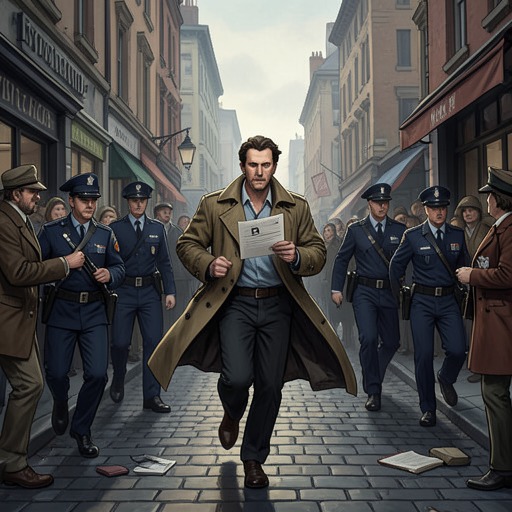
Scotland Yard believes that extensive publicity offers the best chance of catching the murderer, and the response draws the British public into amateur sleuthing. Sussex police form part of the broader police effort that treats the warning for Doncaster as an opportunity to mobilize: the town is to be thoroughly alerted, residents whose names begin with D are urged to be on guard, and police are to be drafted in on a large scale with the agreement of chief constables across England. The operation is presented as an attempt to turn advance warning into protection and a chance of arrest.
The confidence behind that plan is not borne out by a simple identification of the killer. After a report of a man seen crossing a yard, Crome makes inquiries by telephone, but neither he nor the Chief Constable is optimistic. The witness can describe the man only as wearing a dark suit and a Homburg hat, and the man was seen without a bag or suitcase. The limited description leaves the police with a possible lead, not a resolution.
Limits of visibility
The investigation’s publicity and deployment of police make the threat conspicuous, but they do not by themselves expose the person behind it. Poirot later explains that the letter-writer’s purpose was to direct attention toward a group of murders, so that an individual killing would be least noticed as part of a series. The police response therefore sits within the murderer’s larger deception: the effort to connect and monitor the crimes is necessary, yet the imposed pattern also helps conceal the crime that matters most. Sussex police’s part in the pursuit reflects the novel’s contrast between public vigilance and the detective’s need to look past the apparent pattern.